آخر الأخبار

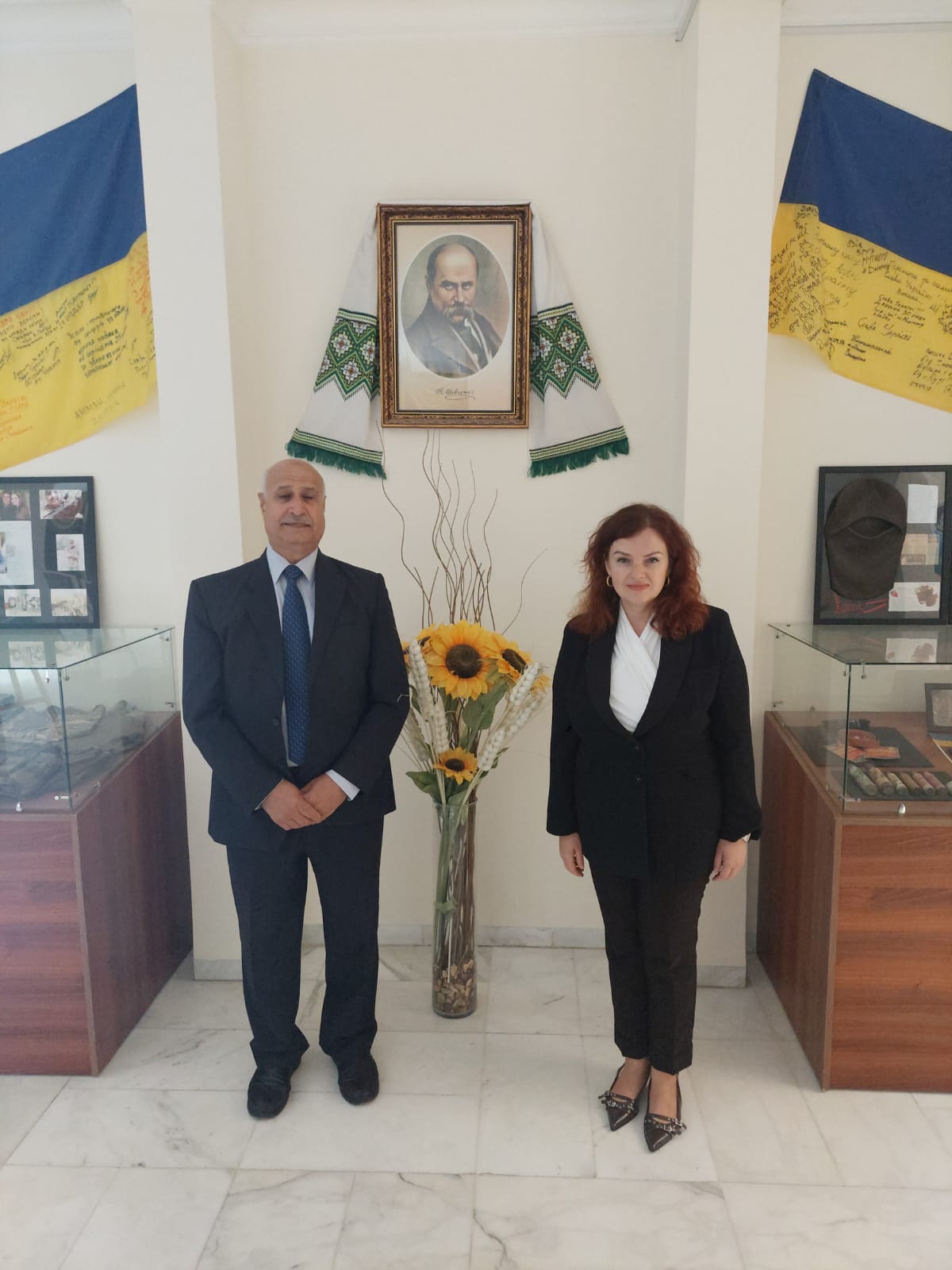
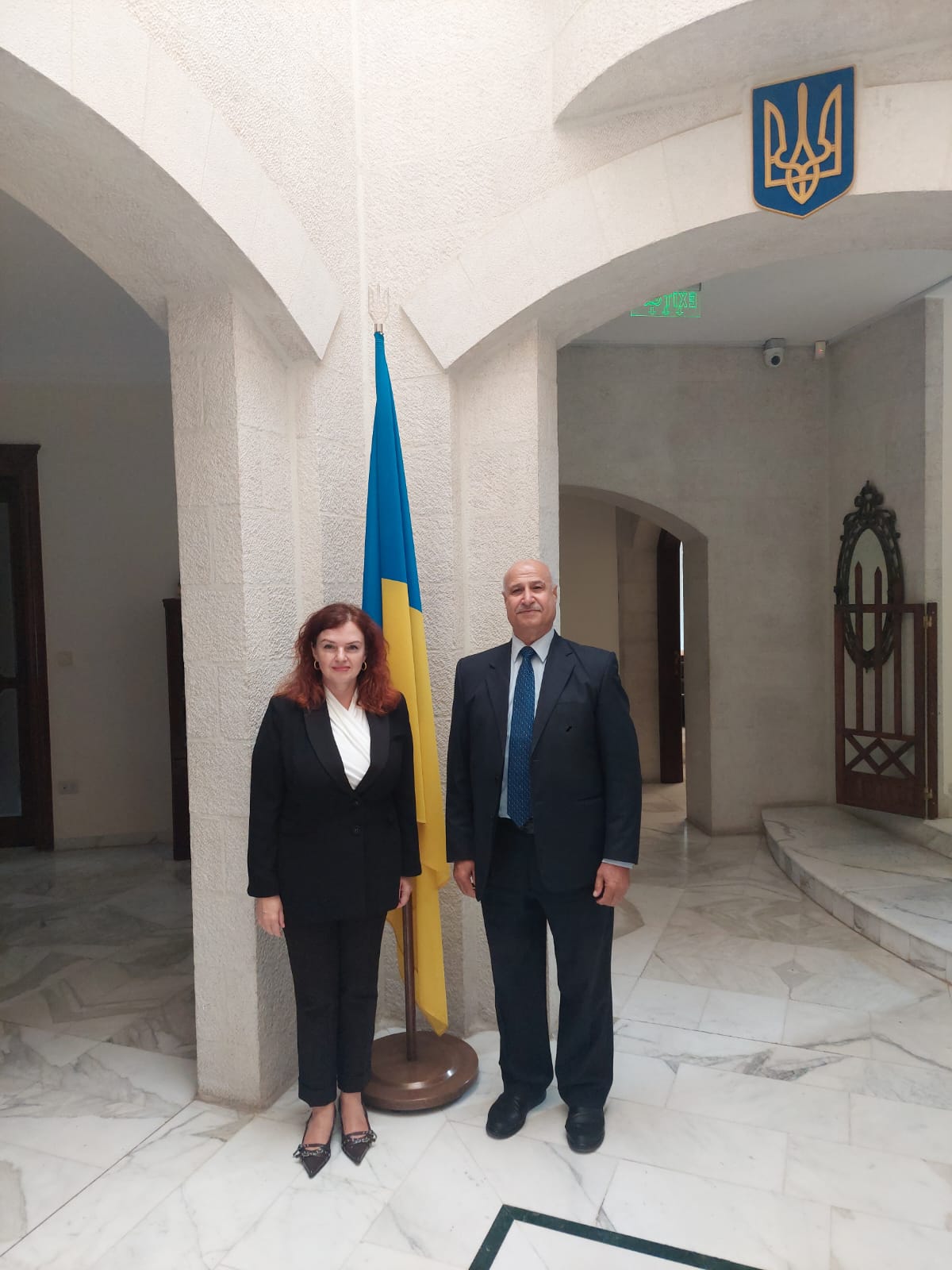
An Exclusive Interview by the Ambassador of Ukraine to Jordan with 'Jawharat Al-Arab News' Website on Ukrainian-Jordanian Relations and Russia's War Against Ukraine / Conducted by Editor-in-Chief, Advisor Mohammad Saleh Al-Malkawi
* Ukraine’s Ambassador to Jordan Speaks Candidly and Transparently with the Editor-in-Chief of Jawharat Al-Arab News Website About Russia’s War Against Ukraine
* Ukrainian President’s Visit to Jordan Last March and Meeting with His Majesty the King Opened Promising Prospects for Political, Security, Defence, Economic and Humanitarian Cooperation
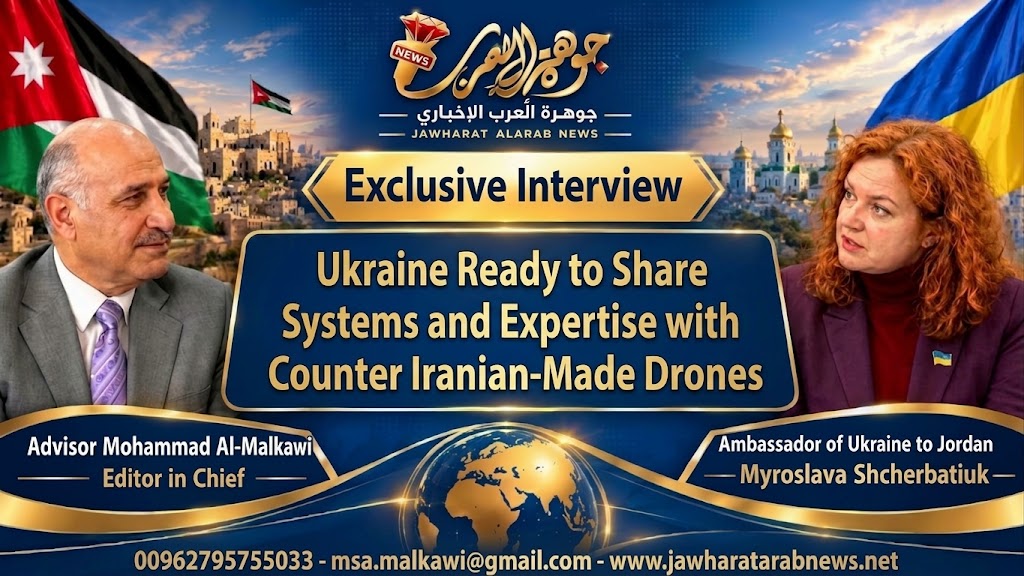
* Ukraine Ready to Share Systems and Expertise with Jordan to Counter Iranian-Made Drones
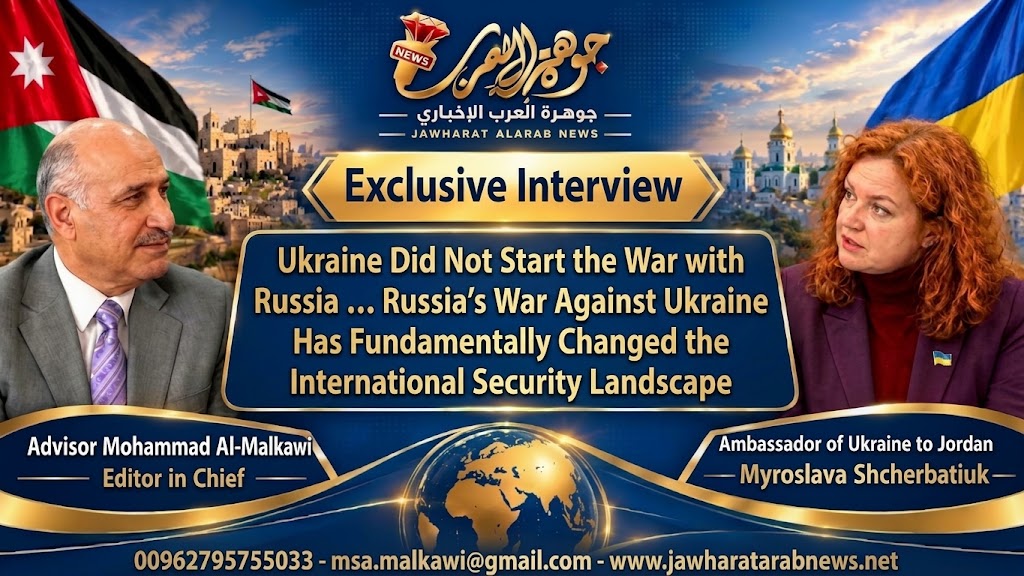
* Ukraine Did Not Start the War with Russia… Russia’s War Against Ukraine Has Fundamentally Changed the International Security Landscape
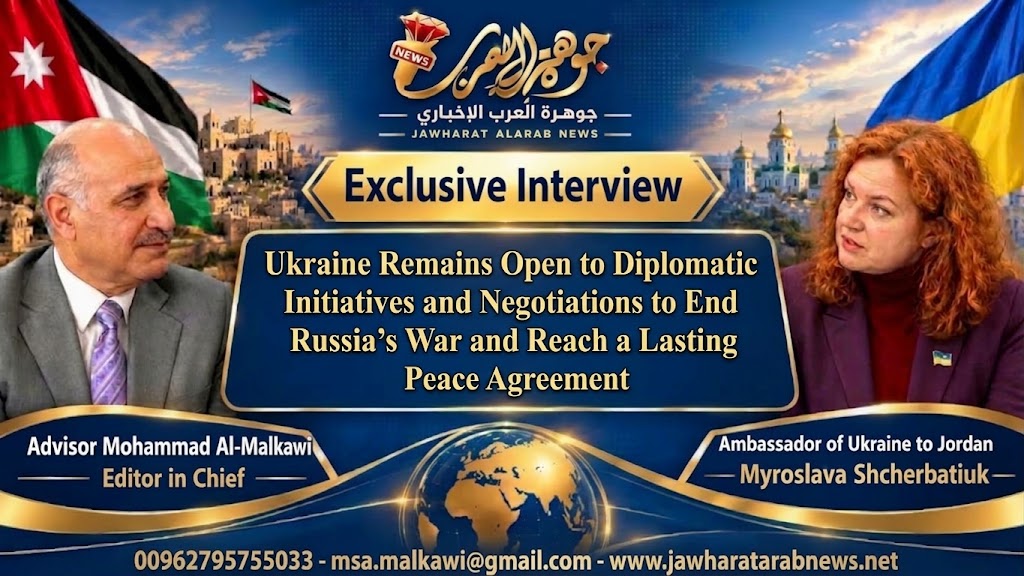
* Ukraine Remains Open to Diplomatic Initiatives and Negotiations to End Russia’s War and Reach a Lasting Peace Agreement
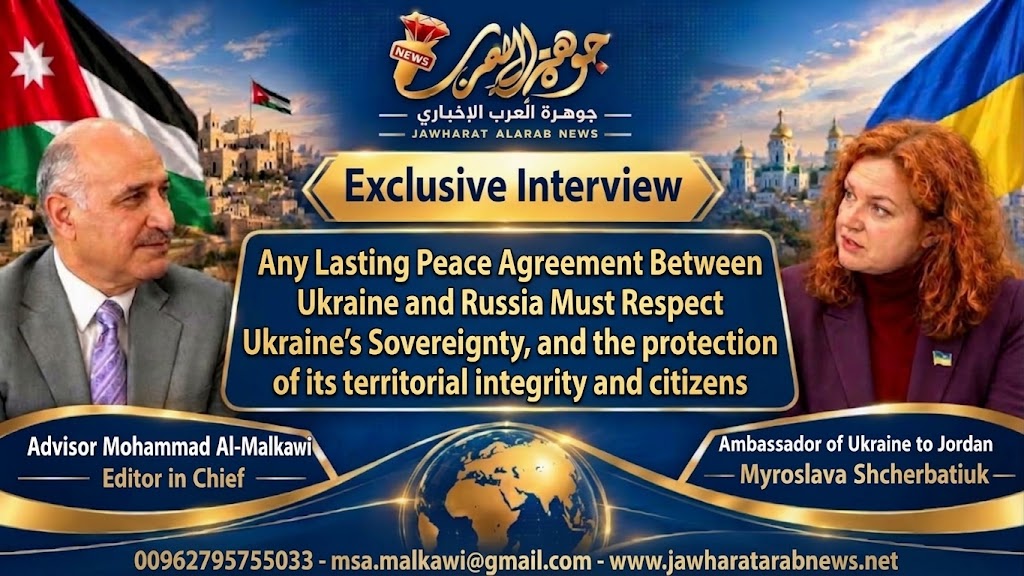
* Any Lasting Peace Agreement Between Ukraine and Russia Must Respect Ukraine’s Sovereignty, and the protection of its territorial integrity and citizens.
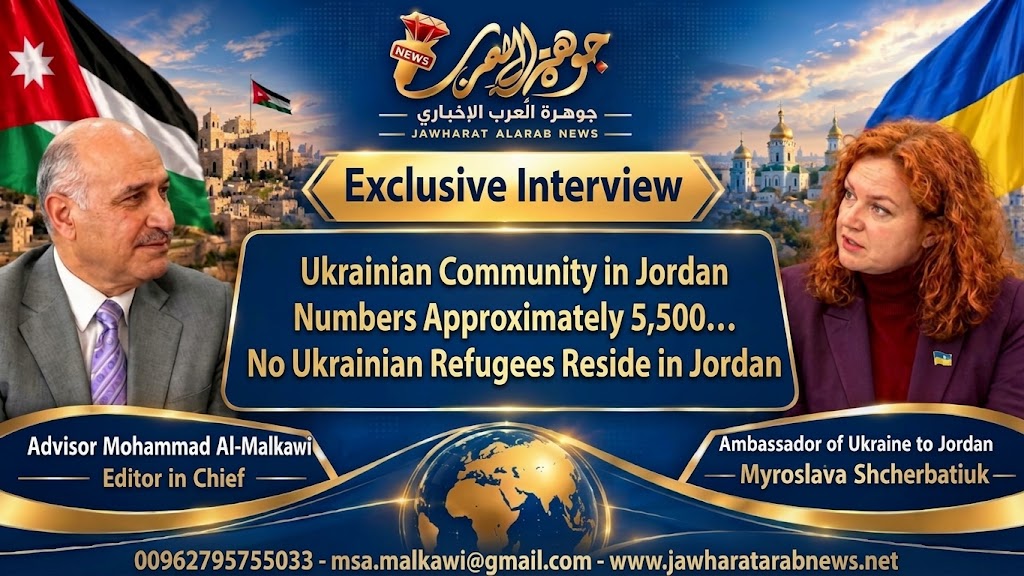
* Ukrainian Community in Jordan Numbers Approximately 5,500… No Ukrainian Refugees Reside in Jordan
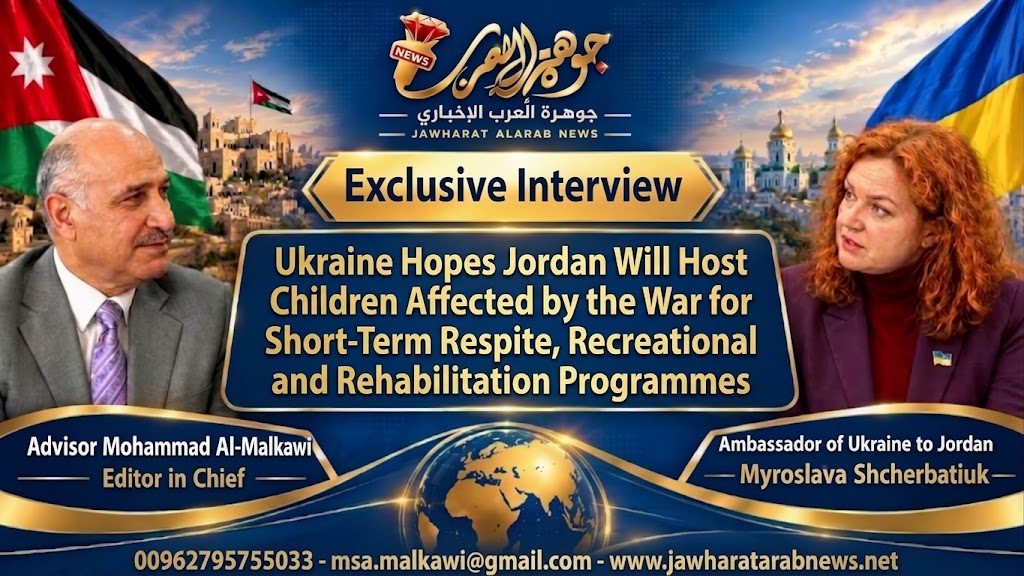
* Ukraine Hopes Jordan Will Host Children Affected by the War for Short-Term Respite, Recreational and Rehabilitation Programmes
·AMMAN — Jawharat Arab News — Exclusive Interview
·Interview conducted by Editor-in-Chief, Advisor Mohammad Saleh Al-Malkawi
Ukraine’s Ambassador to Jordan, Myroslava Shcherbatiuk, has said that Jordanian-Ukrainian relations offer promising opportunities for expanding bilateral cooperation across political, security, defence, economic and humanitarian fields. She stressed that Ukraine seeks to move relations with Jordan beyond traditional diplomatic dialogue towards practical partnerships that serve the mutual interests of both countries and strengthen their security and capacity to address regional and international challenges.
In an exclusive interview with Jawharat Arab News, Ambassador Shcherbatiuk said Ukrainian President Volodymyr Zelenskyy’s visit to Jordan on 29 March 2026 marked an important milestone in bilateral relations, particularly amid the security escalation witnessed across the region.
She noted that President Zelenskyy’s talks with His Majesty King Abdullah II focused on opportunities to develop security and defence cooperation and to draw on Ukraine’s accumulated experience in countering missiles and unmanned aerial vehicles (UAVs), as well as protecting critical infrastructure.
The ambassador added that Ukraine views Jordan as an important regional partner and sees considerable potential for cooperation in food security, renewable energy, trade, investment and humanitarian action, alongside stronger ties between civil society organisations, universities and cultural institutions in both countries.
(Security and Defence Cooperation to Counter Drone Threats)
Ambassador Shcherbatiuk explained that Russia’s war against Ukraine has fundamentally transformed the international security environment and created new challenges for international relations and partnerships.
She said Ukraine understands the nature of the threats facing Middle Eastern countries, having experienced Russian attacks on Ukrainian cities, civilians and critical infrastructure involving Iranian-designed drones and other weapons.
According to the ambassador, these experiences have revealed areas of common security concern between Ukraine and countries across the region, creating opportunities to exchange expertise and technology and develop more integrated defence solutions.
She emphasised that Ukraine has accumulated extensive experience in countering aerial attacks, developing innovative defence technologies and establishing integrated systems to protect civilians and critical facilities. Ukraine, she said, is prepared to share this expertise with Jordan and its regional partners.
Shcherbatiuk stressed that Jordanian-Ukrainian discussions have established an important basis for further exploring cooperation opportunities. Both sides are working to translate their shared understanding and vision into practical areas of collaboration through consultations and coordination between the relevant institutions, while taking account of each country’s needs and capabilities.
She explained that Ukraine’s experience extends beyond manufacturing drones or developing individual interception technologies. It also encompasses the development of comprehensive counter-drone defence systems incorporating radar and detection technologies, advanced software, electronic warfare, interceptor drones and real-time coordination among the various components of a defence network.
The effectiveness of such systems, she added, depends on the speed with which information is processed and decisions are made. Responding to modern aerial threats may require action within seconds, prompting Ukraine to develop more flexible and integrated approaches to reducing the time between detecting a threat and responding to it.
The ambassador said potential cooperation with Jordan could include technology exchange, technical consultations, training and the development of defence solutions tailored to national requirements.
Discussions on the possible forms of cooperation are continuing, she noted, expressing hope that they would lead to tangible outcomes that strengthen regional security and protect civilian lives.
She also warned that the growing availability of drones among non-state armed groups presents increasing challenges to regional security and stability. The spread of military technologies outside official frameworks, she said, raises serious concerns about national sovereignty and civilian safety.
(Ukrainian Ambassador Calls for Expanded Agricultural Trade with Jordan)
Turning to economic relations, Ambassador Shcherbatiuk said trade and food security are two fundamental pillars of Jordanian-Ukrainian cooperation.
Ukraine, she explained, is seeking to restore and expand its traditional agricultural exports to the Jordanian market, particularly wheat, barley and corn, alongside vegetable oils and other food products.
According to figures cited by the ambassador, bilateral merchandise trade between Ukraine and Jordan reached approximately US$179 million in 2025, exceeding US$209 million during the first seven months of 2026.
She said these figures demonstrate the potential for further developing the economic partnership despite the difficult circumstances facing Ukraine.
Vegetable oils, particularly sunflower oil, account for the largest share of Ukrainian exports to Jordan. According to the data she provided, sunflower, safflower and cottonseed oils represented approximately 74 per cent of Ukraine’s total exports to the Kingdom between January and July 2026, while soybean oil accounted for an additional 5.3 per cent.
Shcherbatiuk noted that Ukraine has traditionally been an important supplier of wheat, barley and corn to Jordan. However, Russian attacks on ports, maritime infrastructure and transport routes have disrupted supply chains and increased transportation costs, affecting Ukraine’s ability to export grain to international markets.
Restoring and expanding grain exports remains an immediate priority for Ukraine, she said. The country is interested in participating in Jordanian government tenders for grain purchases, including those associated with securing the Kingdom’s strategic reserves.
Reliable supplies of Ukrainian agricultural products could contribute to strengthening Jordan’s food security, the ambassador added, particularly given the Kingdom’s reliance on imports to meet a substantial portion of its food requirements.
She also highlighted opportunities to diversify Ukrainian exports to Jordan by increasing supplies of processed foods, confectionery, dairy products and other agricultural goods. Such diversification, she said, would broaden the bilateral trade relationship beyond primary agricultural commodities.
Economic cooperation is not limited to Ukrainian exports, she stressed. Jordan is also an important supplier of mineral fertilisers to Ukraine, particularly potash and compound fertilisers required by the Ukrainian agricultural sector.
The two-way trade relationship creates opportunities for joint production and investment projects, the ambassador said, while closer direct engagement between companies could help remove trade barriers and explore possibilities for further trade liberalisation between the two countries.
(Promising Opportunities for Jordanian Companies in Ukraine’s Energy Market)
On energy cooperation, Ambassador Shcherbatiuk said the sector offers significant opportunities for future collaboration, particularly in renewable energy, energy efficiency and modern technologies.
Jordan has made progress in developing solar and wind energy projects, she noted, while Ukraine continues to work towards modernising its energy sector and improving its sustainability despite the consequences of the war.
Combining the two countries’ expertise and capabilities could pave the way for joint projects, investment and technical knowledge-sharing that serve their respective economic and development interests.
Energy security and the protection of critical infrastructure represent another important area for cooperation, she added, given the damage sustained by Ukrainian power-generation facilities and energy networks as a result of continuing Russian attacks.
Ukraine has gained practical experience in protecting, repairing and maintaining energy facilities, developing decentralised electricity generation and securing supplies during emergencies. These capabilities, she said, could be valuable to Jordan and other countries in the region as they address security threats targeting critical infrastructure.
In a direct message to Jordan’s private sector, Shcherbatiuk encouraged companies involved in manufacturing, supplying or distributing solar panels, components and related equipment to explore opportunities in the Ukrainian market.
The need for reliable, decentralised energy solutions is increasing in Ukraine because of the damage to its energy infrastructure, she explained. Solar panels, power inverters, energy-storage systems and related technologies could help local communities, hospitals, schools and businesses better withstand electricity outages.
The ambassador expressed the view that Jordanian companies entering this market could benefit from commercial and investment opportunities while contributing to Ukraine’s energy-sector recovery.
She also pointed to potential cooperation in smart electricity grids, decentralised power generation, joint research and the exchange of expertise between the private sectors of both countries.
(Ambassador Shcherbatiuk: A Just Peace Must Preserve Ukraine’s Sovereignty)
Addressing peace efforts, the ambassador stressed that Ukraine did not start the war. She described Russia’s aggression, which began in 2014 and escalated into a full-scale invasion in February 2022, as a violation of Ukraine’s sovereignty, internationally recognised borders and the fundamental principles of international law.
She noted that the United Nations General Assembly has repeatedly reaffirmed Ukraine’s sovereignty and territorial integrity and called on Russia to withdraw its forces from Ukrainian territory.
Ukraine remains committed to achieving a just, comprehensive and lasting peace, she said.
The ambassador added that Ukraine is open to diplomatic initiatives and negotiations, including efforts led by the United States and other international partners. However, she considers Russia’s continued pursuit of its objectives through military force to be the principal obstacle to peace.
Russian attacks on cities, residential areas and critical energy infrastructure continue, she said, arguing that international efforts should focus on increasing political, diplomatic and economic pressure on Russia rather than on Ukraine, which is defending its sovereignty and territorial integrity.
Shcherbatiuk emphasised that any ceasefire must be genuine, reciprocal and binding on all parties. Any lasting peace agreement, she said, must be based on respect for Ukraine’s sovereignty and territorial integrity and the principles of the United Nations Charter.
Ukraine’s objective, she added, is not merely to secure a temporary halt to the fighting, but to prevent future aggression.
In this context, the ambassador praised Arab countries for supporting diplomatic and humanitarian efforts.
She expressed appreciation for Saudi Arabia’s efforts to facilitate diplomatic contacts and host peace talks, the United Arab Emirates’ role in mediating prisoner-of-war exchanges and hosting negotiations, and Qatar’s contribution to the return of Ukrainian children who were forcibly transferred or deported from Ukraine by Russia.
She also welcomed Jordan’s support for peaceful solutions grounded in international law and expressed Ukraine’s desire to strengthen the Kingdom’s participation in efforts to bring the war to an end.
(Escalation in the Middle East Places Additional Pressure on Global Defence Capabilities)
Asked whether military escalation in the Middle East was affecting international attention to the war in Ukraine, Ambassador Shcherbatiuk said the proliferation of armed conflicts places additional burdens on the international community and increases pressure on diplomatic, humanitarian and military resources.
She cited figures attributed to the International Committee of the Red Cross, which reportedly recorded approximately 130 armed conflicts worldwide in 2024. This increase, she said, reflects the growing challenges facing international peace and security.
Developments in the Middle East do not mean that the international community has forgotten the war in Ukraine, the ambassador emphasised. However, simultaneous conflicts have practical implications for the availability of critical defence capabilities, particularly air-defence systems and interceptor missiles.
Ukraine has developed extensive experience in countering Iranian-designed Shahed drones, she explained. Nevertheless, intercepting Russian ballistic missiles remains a major challenge, requiring advanced systems such as Patriot and SAMP/T, together with sustained supplies of specialised interceptor missiles.
Shcherbatiuk added that escalation involving Iran has increased global demand for these systems and capabilities, placing further pressure on production capacity and available stockpiles. This has raised concerns about competition for air-defence resources and the possibility of delivery delays.
International security, she stressed, should not be viewed as a competition between different regions or their respective crises. Instead, security challenges must be addressed collectively so that one crisis does not undermine the international community’s ability to respond to another.
Food Security and Humanitarian Solidarity: A Shared Jordanian-Ukrainian Experience
On humanitarian cooperation, Ambassador Shcherbatiuk praised Jordan’s role in facilitating the delivery of international assistance to the Palestinian people.
She said cooperation between the two countries has included the delivery of Ukrainian food aid to the Gaza Strip through Jordan under the Food from Ukraine initiative, in partnership with the United Nations World Food Programme and international donors.
According to the ambassador, a shipment of 1,000 tonnes of Ukrainian wheat flour was transported through Jordan to Gaza in July 2024, helping provide bread for approximately 100,000 people for one month.
Plans were also in place for additional shipments of wheat flour and sunflower oil as part of a broader assistance programme involving more than 7,000 tonnes of aid, she said.
Ukraine appreciates Jordan’s role as a humanitarian logistics hub facilitating the delivery of assistance to Palestinians, the ambassador added. Humanitarian solidarity and food security remain important areas of cooperation between the two countries, even amid wars and crises.
She also noted that Jordan has extensive experience hosting Palestinian refugees, as well as people displaced by conflicts in Syria and Iraq. This has given the Kingdom valuable expertise in responding to the humanitarian, social and psychological needs of communities affected by conflict.
Such experience could be useful to Ukraine, particularly in psychological rehabilitation, support for children and families affected by war, assistance to vulnerable groups and social reintegration, she said.
(Ukrainian Ambassador Reveals Size of Ukrainian Community in Jordan)
Regarding the Ukrainian community in the Kingdom, Shcherbatiuk estimated its size at approximately 5,500 people, according to estimates by the Ukrainian Embassy.
She explained that the community’s roots date back to the 1960s, when Jordanian students travelled to the Soviet Union, including Ukraine, to pursue university education.
Educational links continued after Ukraine gained independence in 1991. Some Jordanians who studied at Ukrainian universities subsequently established family and social ties with Ukrainian society, married Ukrainian women and settled in Jordan with their families.
The community consists primarily of Ukrainian women married to Jordanians and the children of these families, she said. These human and cultural connections have helped promote mutual understanding between the two peoples while preserving the Ukrainian language, traditions and identity.
Asked about Ukrainian refugees, Shcherbatiuk clarified that Jordan does not currently host a Ukrainian refugee community in the conventional sense.
She expressed her country’s gratitude to the Jordanian authorities for facilitating temporary entry for Ukrainian nationals with relatives in the Kingdom following the start of Russia’s full-scale invasion on 24 February 2022. This enabled them to find safety and reunite with family members during the early stages of the war.
(Call for Jordan to Consider Hosting Ukrainian Children Affected by the War)
In one of the interview’s most significant humanitarian messages, Ambassador Shcherbatiuk expressed hope that Jordan would consider hosting Ukrainian children affected by the war through short-term programmes focused on respite, recreation and rehabilitation.
Children who have spent years living under the constant threat of missiles and drones need safe environments that help them regain psychological and physical well-being, she explained.
Giving them the opportunity to spend several weeks in a peaceful setting, away from the horrors of war, could have a significant positive impact on their health and welfare, she said.
The ambassador suggested that such initiatives could be organised in cooperation with Jordanian civil society organisations and charitable associations, providing a practical expression of humanitarian solidarity between the two peoples.
She also noted that Ukrainian civil society organisations have gained extensive experience in volunteering and emergency response during the war. This expertise could be shared with Jordanian organisations to strengthen both sides’ capacities in humanitarian response and crisis management.
Shcherbatiuk called for more direct cooperation between non-governmental organisations, universities, volunteer institutions and cultural organisations in the two countries. Such cooperation, she said, could take the form of joint humanitarian projects, educational exchange programmes, cultural initiatives and sustained professional engagement.
(Towards a Partnership Beyond Traditional Diplomacy)
Concluding the interview, Ambassador Shcherbatiuk emphasised that Jordanian-Ukrainian relations have significant potential to enter a broader and more diverse phase, combining political dialogue with security cooperation, trade, investment, humanitarian action and cultural engagement.
Ukraine’s experience in countering aerial threats and protecting critical infrastructure, together with Jordan’s capabilities in renewable energy, logistics and humanitarian work, could open new avenues for cooperation, she said.
Realising this potential, she added, will require continued consultations and efforts to translate the opportunities under discussion into practical programmes and projects.
From security and defence to wheat and vegetable oils, renewable energy and humanitarian solidarity, relations between Jordan and Ukraine offer considerable scope for developing a partnership that serves both countries’ interests, strengthens ties between their peoples and responds to the growing challenges facing the region and the world.
Full text of the exclusive press interview conducted by Jawharat Al-Arab News website with H.E. Mrs. Myroslava Shcherbatiuk, Ambassador of Ukraine to Jordan, on Jordanian-Ukrainian relations, prospects for political, security, economic, and humanitarian cooperation, and the current situation in Ukraine."
Question 1. How would you describe Jordanian-Ukrainian relations today? What did President Volodymyr Zelenskyy’s visit to Jordan on March 29 add to bilateral relations? Have there been any outcomes in security, defence and food security?
I would describe Ukrainian-Jordanian relations as traditionally friendly, based on mutual respect, constructive dialogue and a shared commitment to the fundamental principles of international law. At the same time, I believe our bilateral relations should be viewed through two distinct periods: before and after Russia’s full-scale invasion of Ukraine in February 2022. The war has fundamentally changed the security environment, not only in Europe but globally, and has brought new challenges and priorities to our international partnerships. In this context, Ukraine deeply appreciates Jordan’s consistent and principled support for our sovereignty and territorial integrity. These are fundamental principles of the UN Charter that are equally important for Ukraine, Jordan and every other sovereign state.
President Volodymyr Zelenskyy’s visit to Jordan on 29 March 2026 marked an important moment in our bilateral dialogue. It took place against the backdrop of a serious escalation in the Middle East, when Jordan and other countries in the region were facing Iranian missile and drone attacks. The visit was part of the President’s broader diplomatic engagement with several countries in the region and reflected Ukraine’s solidarity with their people at a particularly difficult time. Ukraine understands these threats very well. For years, our cities, civilian population and critical infrastructure have been targeted by Russian attacks involving Iranian-designed drones and other weapons. In this sense, Ukraine and the countries of the Middle East face certain common security challenges.
The central focus of the meeting between President Zelenskyy and His Majesty King Abdullah II was therefore security cooperation and the possibility of developing a practical partnership in this field. Ukraine has accumulated extensive experience in countering drone and missile attacks, developing innovative defence technologies and establishing integrated systems to protect civilian populations and critical infrastructure. We expressed our readiness to share this experience, expertise and technological solutions with Jordan and other partners in the region. We believe that such cooperation should be mutually beneficial and contribute to strengthening the security and resilience of our nations.
The discussions between our two leaders established an important basis for further cooperation. Both sides are now working to translate the understandings and shared vision expressed during the visit into practical cooperation. Naturally, security and defence cooperation requires detailed consultations, coordination between relevant institutions and careful consideration of the needs and capabilities of both countries. What is particularly important is that we see opportunities to move beyond traditional diplomatic dialogue towards a more practical and forward-looking partnership.
Food security remains another important dimension of our relations. Ukraine has traditionally been one of the world’s major agricultural exporters and an important contributor to food security in the Middle East and beyond. Russia’s continued attacks on Ukrainian ports, agricultural facilities and transport infrastructure have seriously disrupted established supply chains and created additional risks for international food markets. Nevertheless, Ukraine continues to make every possible effort to maintain agricultural exports, including through its maritime corridor and alternative transport routes. We remain interested in developing agricultural trade with Jordan and contributing to the Kingdom’s long-term food security.
At the same time, I would particularly emphasize that, despite the devastating consequences of Russia’s aggression, Ukraine continues to provide humanitarian food assistance to people suffering from conflicts in other parts of the world. A meaningful example of our cooperation with Jordan was the delivery of Ukrainian food assistance to the Palestinian people in Gaza under President Zelenskyy’s Food from Ukraine initiative, implemented in cooperation with the United Nations World Food Programme and international donors. In July 2024, a shipment of 1,000 tonnes of Ukrainian wheat flour was transported through Jordan and delivered to Gaza, helping provide bread to approximately 100,000 people for a month. Further deliveries of wheat flour and sunflower oil were envisaged under a broader humanitarian assistance programme exceeding 7,000 tonnes. Jordan played an important role as a humanitarian logistics hub, facilitating the transportation of international assistance to the Palestinian population. We highly appreciate the Kingdom’s contribution to these humanitarian efforts and its commitment to alleviating civilian suffering.
For Ukraine, this cooperation carries a particularly important message: even while defending our own country against a brutal war of aggression, we remain committed to helping others who face hunger, displacement and the consequences of armed conflict. We believe that food security and humanitarian solidarity should unite nations, regardless of geography. This shared commitment, together with our traditional economic ties and emerging security cooperation, creates a solid foundation for a new stage in Ukrainian-Jordanian relations.
Question 2. What are the most important sectors in which Ukraine is seeking opportunities for future business cooperation with Jordan, particularly in food security, including wheat, barley and vegetable oils?
Trade and economic cooperation has traditionally been an important component of Ukrainian-Jordanian relations, with agriculture and food security playing a particularly significant role. Despite the challenges caused by Russia’s full-scale invasion, our bilateral trade continues to develop. In 2025, trade in goods between Ukraine and Jordan amounted to approximately USD 179 million. During the first seven months of 2026, it exceeded USD 209 million, representing an increase of 17% compared to the entire previous year. These figures demonstrate the considerable potential of our economic partnership, even under extremely difficult circumstances.
Agricultural products dominate Ukraine’s exports to Jordan. Today, vegetable oils, particularly sunflower oil, account for the largest share of these exports. During January–July 2026, sunflower, safflower and cottonseed oils represented approximately 74% of Ukraine’s total exports to Jordan, while soybean oil accounted for a further 5.3%. Traditionally, Ukraine has also supplied Jordan with wheat, barley, maize and other agricultural commodities. However, the structure of our exports has changed significantly as a result of Russia’s aggression. Russian attacks on Ukrainian ports, maritime infrastructure and transport routes have seriously disrupted traditional supply chains, increased transportation costs and limited our ability to export agricultural products, particularly grain, to international markets.
Therefore, one of our immediate priorities is to restore and expand traditional agricultural exports to Jordan, especially wheat, barley and maize. Ukraine remains interested in participating in Jordanian government tenders for grain purchases, including those aimed at maintaining the Kingdom’s strategic food reserves. Given Jordan’s substantial dependence on food imports, we believe that reliable supplies of Ukrainian agricultural products can make an important contribution to its long-term food security. At the same time, we see opportunities to diversify our exports by increasing supplies of processed food products, confectionery, dairy products and other agricultural goods.
Importantly, our economic cooperation is not limited to Ukrainian exports. Jordan is an important supplier of mineral fertilizers to Ukraine, particularly potash and compound fertilizers, which are essential for our agricultural sector. This creates opportunities not only for expanding trade but also for developing joint production and investment projects. We are also interested in strengthening direct contacts between businesses, removing existing trade barriers and exploring possibilities for further trade liberalization. Our objective is to build a more diversified, sustainable and mutually beneficial economic partnership that will contribute to the development and food security of both countries.
Question 3. Are there opportunities for cooperation between Jordan and Ukraine in the energy sector?
I believe the energy sector offers considerable potential for future cooperation between Ukraine and Jordan, particularly in renewable energy, energy efficiency and modern technologies. Both countries are interested in strengthening their energy independence and diversifying energy sources. Jordan has made significant progress in developing solar and wind energy, while Ukraine, despite the ongoing war, continues to pursue the modernization of its energy sector and the transition towards a more sustainable energy system. These complementary experiences could provide a solid basis for joint projects, technological cooperation and investment.
Another particularly promising area is energy security and the protection of critical infrastructure. For more than four years, Ukraine’s energy system has been subjected to systematic Russian missile and drone attacks, causing extensive destruction of power generation facilities and electricity networks. Under these extraordinary circumstances, Ukraine has gained unique practical experience in protecting, repairing and maintaining energy infrastructure, developing decentralized power generation and ensuring emergency electricity supplies. We believe this experience could also be valuable for Jordan and other countries in the region, particularly in light of the growing security challenges in the Middle East.
In this context, I would particularly encourage Jordanian companies involved in the manufacturing and supply of solar panels, related components and equipment to explore opportunities in the Ukrainian market. Given the current realities on the ground in Ukraine, where Russian attacks continue to damage energy infrastructure and disrupt electricity supplies, there is a particularly strong need for decentralized and reliable energy solutions. Solar panels, inverters, energy storage systems and other related technologies can play an important role in strengthening the energy resilience of Ukrainian communities, hospitals, schools and businesses. I believe this represents a promising opportunity for Jordanian manufacturers and suppliers to contribute to Ukraine’s energy recovery while developing mutually beneficial commercial partnerships.
Looking ahead, we also see opportunities for broader cooperation between Ukrainian and Jordanian companies in renewable energy, smart grids and decentralized electricity generation. Joint research, exchange of expertise and private-sector partnerships could contribute to the development of more resilient and efficient energy systems. I am convinced that energy cooperation could become another important dimension of our bilateral relations, bringing tangible benefits to both countries.
Question 4. Where do peace efforts in Ukraine currently stand? Is there a possibility of negotiations with Russia in the near future? Does Ukraine welcome Jordanian and broader Arab efforts, including those of Saudi Arabia, to mediate towards a ceasefire and peace negotiations?
First of all, we must be absolutely clear about one fundamental fact: Ukraine did not start this war. It was Russia that launched its unprovoked and unjustified aggression against Ukraine in 2014 and escalated it into a full-scale invasion in February 2022, violating Ukraine’s internationally recognized borders, bilateral agreements and fundamental principles of international law. The United Nations General Assembly has repeatedly reaffirmed Ukraine’s sovereignty and territorial integrity and demanded that Russia withdraw its forces from Ukrainian territory. Ukraine has always advocated the peaceful settlement of disputes and remains fully committed to achieving a just, comprehensive and lasting peace. No country wants peace more than Ukraine, whose people have been suffering from this aggression for more than twelve years.
Ukraine remains open to diplomatic efforts and negotiations, including through the mediation of the United States and other international partners. However, the main obstacle to peace is not Ukraine’s unwillingness to negotiate, but Russia’s continued determination to pursue its objectives through military force. Despite its claims of military success, Russia has failed to achieve its original strategic objectives, while Ukraine has liberated significant territories occupied since 2022. Unable to break Ukrainian resistance, Russia continues its systematic attacks against civilian cities, residential areas and critical energy infrastructure. Even recent initiatives concerning a ceasefire in attacks on energy facilities have been followed by further Russian strikes. We therefore firmly believe that international efforts must focus on increasing political, diplomatic and economic pressure on Russia, rather than on Ukraine, which is defending its sovereignty, territorial integrity and its people’s right to live in peace. It is President Putin who started this war, and it is he who has the power to end Russia’s aggression. The international community must direct its pressure towards the aggressor, not the victim of aggression.
We highly appreciate the constructive role played by Arab countries in supporting diplomatic and humanitarian efforts. We are particularly grateful to Saudi Arabia for facilitating diplomatic contacts and providing a platform for peace discussions, to the United Arab Emirates for its valuable mediation in prisoner-of-war exchanges and for hosting negotiations, and to Qatar for its important contribution to the return of Ukrainian children forcibly transferred or deported by Russia. We also welcome Jordan’s support for peaceful solutions based on international law and would appreciate its further engagement. Ukraine is ready to work with all partners genuinely committed to ending this war. However, any ceasefire must be real, reciprocal and respected, and any lasting peace must be based on respect for Ukraine’s sovereignty, territorial integrity and the principles of the UN Charter. Our objective is not simply to stop the fighting temporarily, but to ensure that aggression does not happen again.
Question 5. Has the war waged by the United States against the Iranian regime affected the level of international attention devoted to the war in Ukraine?
Every new armed conflict brings enormous human suffering, further instability and additional challenges to international peace and security. Unfortunately, we are witnessing an alarming increase in the number of conflicts worldwide. According to the International Committee of the Red Cross, approximately 130 armed conflicts were recorded globally in 2024, more than twice as many as fifteen years earlier. Each new crisis places additional pressure on the international community, stretching diplomatic efforts, humanitarian assistance and military resources. However, I would not say that the escalation in the Middle East has caused the international community to forget about Russia’s aggression against Ukraine. The war in Ukraine remains a major challenge to European and global security, and its consequences extend far beyond our borders.
What concerns us most is the practical impact of simultaneous conflicts on the availability of critical defence capabilities. Ukraine has developed considerable expertise and technological solutions to counter Iranian-designed Shahed drones and other unmanned aerial threats. However, intercepting Russian ballistic missiles remains one of our most serious challenges. This requires sophisticated air defence systems, particularly Patriot and SAMP/T, and a continuous supply of highly specialized interceptor missiles. The military escalation involving Iran has significantly increased global demand for these same capabilities, placing additional pressure on already limited production capacities and existing stockpiles. As a result, competition for air defence resources and possible delays in deliveries have become matters of serious concern for Ukraine, especially as Russia continues its attacks on our cities and energy infrastructure.
At the same time, developments in the Middle East demonstrate how closely interconnected international security challenges have become. The Iranian-designed drones that Russia has used extensively against Ukrainian cities now represent a threat to countries across the region as well. Ukraine is ready to share its unique operational experience and technological expertise in countering these threats. We believe that international security should not be viewed as a competition between different regions or conflicts. Supporting Ukraine’s ability to defend its population and critical infrastructure remains essential, just as efforts to restore peace and stability in the Middle East are equally important. The international community must respond to these challenges collectively, without allowing one crisis to undermine its capacity to address another.
Question 6. To what extent could Jordan and other Arab countries benefit from Ukraine’s experience in countering drones, and what is the reality of potential cooperation in this field?
This was, in fact, one of the central issues discussed during President Volodymyr Zelenskyy’s meeting with His Majesty King Abdullah II on 29 March 2026, as well as during the President’s visits to Saudi Arabia, the United Arab Emirates and Qatar. Ukraine has expressed its readiness to share its extensive practical experience in countering unmanned aerial threats and to explore opportunities for long-term security cooperation with countries in the region. The growing use of drones in modern warfare, including by non-state armed groups, has fundamentally changed the security environment in the Middle East and created new challenges for the protection of civilian populations and critical infrastructure.
Today, many countries are capable of manufacturing drones of different types and modifications, including relatively inexpensive quadcopters and more sophisticated unmanned aerial systems. However, Ukraine’s unique contribution lies not simply in producing drones or individual interception technologies, but in developing an entire integrated ecosystem of counter-drone defence. This includes multilayered protection, radar and other detection systems, advanced software, electronic warfare capabilities, interceptor drones and real-time coordination between different elements of the defence network. The effectiveness of such a system depends not only on the technologies themselves, but also on how quickly information is processed and operational decisions are made.
The experience of the war in Ukraine has demonstrated that traditional military command procedures are often too slow to respond effectively to modern drone threats. When a hostile drone is detected, there may be only seconds to identify, track and engage it before the opportunity to intercept is lost. Ukraine has therefore developed more flexible and integrated approaches that significantly shorten the time between detection and response, while maintaining the necessary operational control. This ability to combine technology, situational awareness and rapid decision-making is one of the most valuable aspects of Ukrainian expertise. What Ukraine can offer its partners is not merely equipment, but assistance in developing their own comprehensive and sustainable counter-drone defence architecture.
This is particularly relevant for the Middle East, where the proliferation of unmanned aerial systems among armed groups operating outside state control poses an increasingly serious security threat. Iran supplies drone technologies and weapons to non-state actors, while Russia has also contributed to the proliferation of military drone capabilities. Of particular concern are reports of Iranian and Russian involvement in training drone operators associated with non-state armed groups in the region. Such activities not only enhance the military capabilities of these groups but also create serious risks for regional stability, national sovereignty and civilian security. Ukraine understands these challenges from its own experience of confronting Iranian-designed drones used by Russia against our cities.
We believe there is considerable potential for practical cooperation with Jordan and other regional partners, including technological exchanges, expert consultations, training and the development of integrated defence solutions adapted to each country’s specific needs. Discussions on possible forms of cooperation are ongoing, and we hope they will lead to concrete, mutually beneficial results that strengthen regional security and protect civilian lives.
Question 7. Is there a Ukrainian community in Jordan? If so, approximately how large is it? Does this community include Ukrainian refugees?
Jordan is home to a well-established Ukrainian community which, according to estimates by the Embassy of Ukraine, numbers approximately 5,500 people. The history of this community dates back to the 1960s, when many Jordanian students travelled to the Soviet Union, including Ukraine, to pursue higher education. Following Ukraine’s independence in 1991, this educational cooperation continued, with new generations of Jordanian students choosing Ukrainian universities. Many of these students developed lasting personal ties with Ukraine, married Ukrainian women and eventually settled with their families in Jordan.
As a result, the Ukrainian community in Jordan consists predominantly of Ukrainian women married to Jordanian citizens and their children from these mixed marriages. Over the decades, these families have become an important human and cultural bridge between our two countries, contributing to mutual understanding and maintaining close connections with Ukraine. Despite living far from their homeland, many members of the community continue to preserve Ukrainian traditions, language and cultural identity.
As for Ukrainian refugees, Jordan does not currently host a Ukrainian refugee community as such. We are particularly grateful to the Jordanian authorities for their understanding and humanitarian approach following the beginning of Russia’s full-scale invasion on 24 February 2022. At that extremely difficult time, Jordan facilitated temporary entry for Ukrainian citizens who had relatives in the Kingdom, allowing them to find safety, reunite with their families and recover from the shock of the first weeks and months of the war. These were temporary family visits rather than organized refugee arrivals, and the individuals concerned did not receive refugee status or special assistance programmes. We sincerely appreciate this gesture of solidarity from Jordan during one of the most difficult periods in our country’s modern history.
Question 8. What can the Jordanian people, particularly Jordanian civil society organizations, offer their Ukrainian counterparts in the humanitarian, social, voluntary, cultural and other fields?
I believe that one of the most important areas of cooperation is promoting mutual understanding between our societies. For Ukraine, it is essential that the Jordanian public has access to accurate information about Russia’s aggression, which is sometimes insufficiently covered or presented through distorted narratives. At the same time, Ukrainians should have a deeper understanding of the humanitarian challenges facing Jordan and the wider Middle East, particularly the Palestinian issue and the suffering of civilian populations affected by regional conflicts. Civil society organizations, journalists, universities and cultural institutions can play an important role in creating opportunities for honest dialogue, exchanging perspectives and developing a better understanding of each other’s realities.
Jordan has particularly valuable humanitarian experience, having hosted generations of Palestinian refugees as well as large numbers of people displaced by conflicts in Syria and Iraq. Over the decades, the Kingdom has developed considerable expertise in addressing the needs of displaced populations, including through cooperation with international organizations and donor countries. This experience could be highly relevant to Ukraine, especially in psychological rehabilitation, support for children and families affected by war, assistance to vulnerable groups and social reintegration.
In this context, Ukraine would be particularly grateful if Jordan could consider opportunities to host Ukrainian children affected by Russian aggression for short-term rest, recreation and rehabilitation programmes. For children who have spent years living under the constant threat of missile and drone attacks, the opportunity to spend even a few weeks in a safe and peaceful environment, away from the horrors of war, could make an enormous difference to their physical and psychological well-being. Such initiatives, potentially organized in partnership with Jordanian civil society organizations and charitable institutions, would be a deeply meaningful expression of humanitarian solidarity. At the same time, Ukrainian civil society organizations have gained extensive practical experience in humanitarian volunteering and emergency response under extremely difficult wartime conditions, which could also be valuable to their Jordanian counterparts.
I would also welcome stronger direct cooperation between Ukrainian and Jordanian NGOs, universities, volunteer organizations and cultural institutions. Joint humanitarian projects, educational exchanges, cultural initiatives and professional contacts could help transform mutual understanding into practical cooperation. Ultimately, both our societies know the human cost of war and displacement, and I believe this shared understanding can become a strong foundation for solidarity, compassion and lasting people-to-people partnerships.